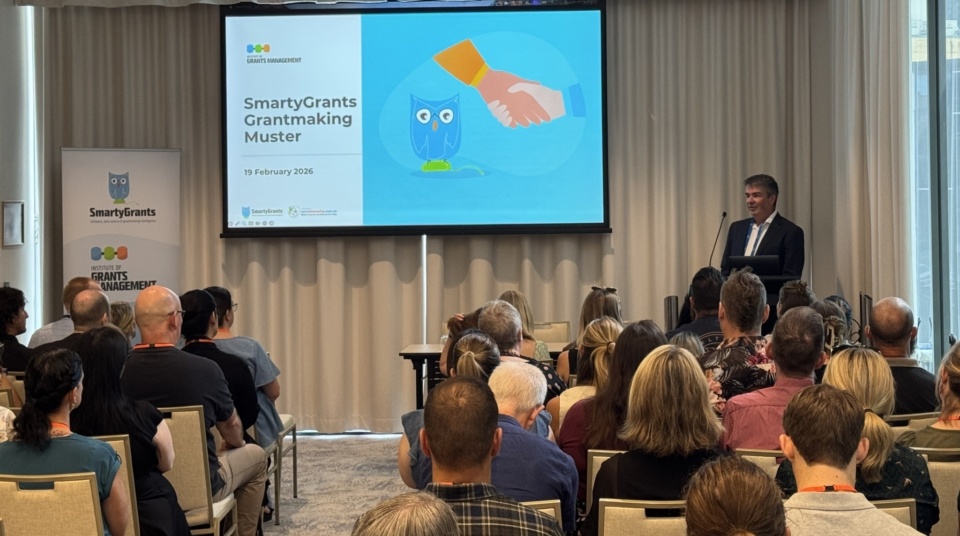
Grantmakers angling for good intel on AI
Posted on 24 Mar 2026
Posted on 24 Mar 2026
By Denis Moriarty, Founder and Group Managing Director, Our Community
If you spend long enough around government grants programs, a pattern emerges.

Governments say they want strong communities. Communities say they want to help build them. Then the grants system gets in the way.
After twenty five years working with community organisations through Our Community and SmartyGrants, I have seen the problem from both sides of the fence. As a former public servant I understand the pressures inside government. As someone who now works closely with grantmakers and grantseekers, I see the consequences outside.
The problem is not that governments fund community projects. The problem is how they fund them.
Most grants systems are built around short term programs, complicated applications and rigid reporting rules. They make sense from a bureaucratic perspective. They provide accountability and neat administrative structures.
But they often ignore how communities actually function.
Local organisations run on volunteer effort, thin budgets and deep commitment. They do not operate on government timelines. They operate on relationships, trust and local knowledge. When funding is unpredictable or overly complex, those relationships suffer and energy drains away from the real work.

"Communities are not problems to be fixed. They are assets to be supported."
What we learned through years of community strengthening work is that the most successful initiatives share a few simple characteristics.
First, they are place based. Instead of applying the same program everywhere, they focus on the specific needs of particular communities.
Second, they involve communities in decision making. The people who live in a place usually understand its problems better than distant administrators.
Third, they are funded for long enough to make a difference. Building local capacity takes time. Short bursts of funding rarely achieve lasting change.
Finally, they recognise that community organisations are partners, not just delivery vehicles.
This is where modern grants management becomes critical.
Technology can remove much of the friction that has historically frustrated both funders and applicants. Well designed grant platforms simplify applications, streamline reporting and make it easier to share data and insights. They also allow governments to see the broader ecosystem of projects they are supporting rather than treating each grant as an isolated transaction.
But technology alone is not enough. Good systems need good policy behind them.
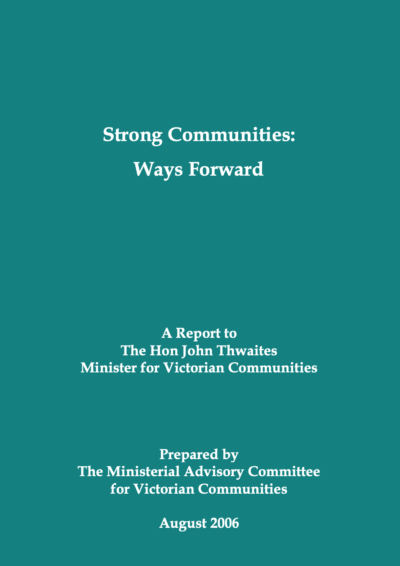
Back in 2006 I was a member of the Ministerial Advisory Committee for Victorian Communities, headed by the much-missed Joan Kirner. John Thwaites, then Deputy Premier and Minister for Communities, asked us to advise him on strengthening communities – what worked, what were the barriers to success, and what were the lessons from previous projects.
Our report, Strong Communities: Ways Forward, set out what we’d learned from our consultations with ethnic communities, municipalities, police, and people working in the field. We recommended (I’m simplifying considerably, but still) whole-of-government co-operation to support increased participation by disadvantaged groups.
The lesson holds that grantmakers need to design programs that support collaboration, encourage innovation and reduce unnecessary administrative burden. They also need to listen to the organisations doing the work on the ground.
The most effective grant programs recognise a simple truth.
Communities are not problems to be fixed. They are assets to be supported.
When governments design grants with that mindset, the results can be extraordinary. Volunteers step forward. Partnerships form. Local leadership grows. Communities become more resilient and more capable of tackling the challenges they face.
When the system works against communities, the opposite happens. Enthusiasm fades, opportunities are lost and public investment delivers less than it should.
The lesson is straightforward.
If we want stronger communities, we need grants systems that strengthen communities too.
Posted on 24 Mar 2026

Posted on 05 May 2025
SmartyGrants has released a new embedded reporting tool designed to strengthen grantmakers’ ability…

Posted on 01 May 2025
A rating system developed by UK foundations offers valuable insights into how grantmakers around…

Posted on 01 May 2025
With the sector juggling restricted grants, tight timelines, high-stakes acquittals, and a…

Posted on 13 Mar 2025
In a February 2025 piece, Maria Chertok and Chandrika Sahai say there's a growing awareness within…

Posted on 10 Mar 2025
Adam Ognall, executive director of partnerships and practice at Philanthropy Australia, considers…

Posted on 10 Mar 2025
Signing on a £1 million (AU$1.93 million) grants program celebrating maritime histories around the…

Posted on 24 Sep 2024
Former professional grantwriter Kylie Cirak believes that grantmakers should look more favourably…
Posted on 16 Sep 2024
Solving the world's biggest problems requires failure, pain, calculated risks and big investments,…

Posted on 19 Jul 2024
A British small grants scheme is among a handful of grantmakers globally experimenting with…
Posted on 06 Mar 2024
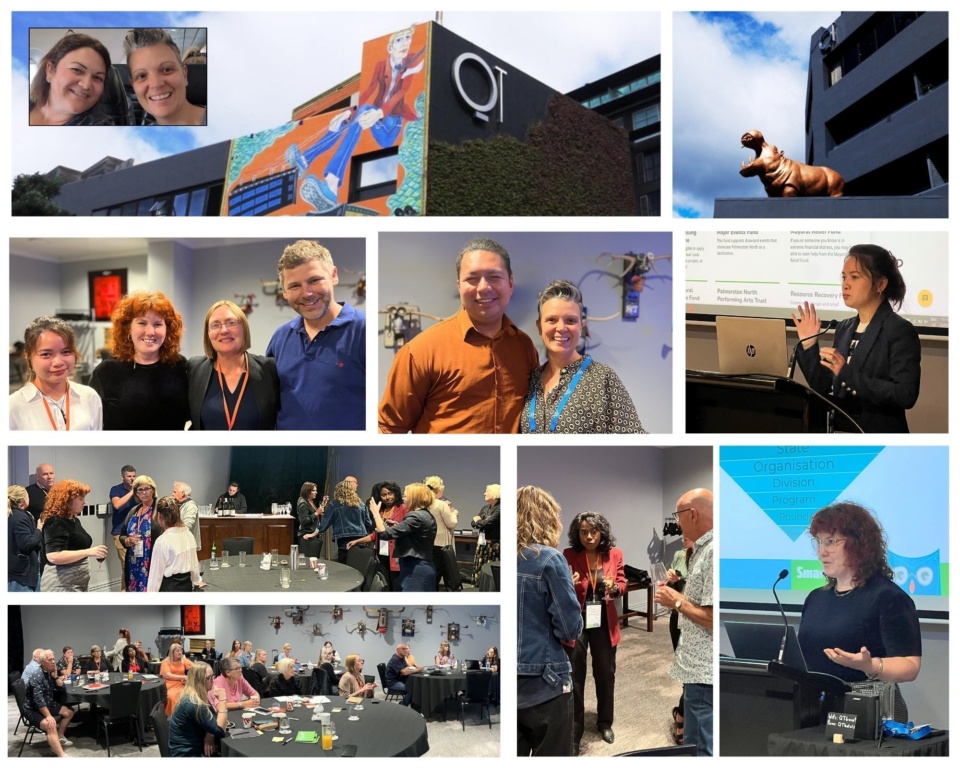
SmartyGrants’ leaders were blown away by the enthusiasm and expertise of New Zealand’s best…

Posted on 06 Mar 2024
Philanthropic funding for environmental and climate change causes is increasingly rapidly, but not…